Stop Marketing Just to Get Attention
Let's start with one of the biggest mistakes restaurants make.
They confuse attention with results.
A post gets 500 likes.
A Reel gets thousands of views.
An influencer posts your food.
A Facebook ad gets lots of clicks.
It feels like your marketing is working.
But then you look at your sales.
Nothing has really changed.
That's because attention is not the same as a customer.
A person watching a food video is not necessarily looking for dinner.
A person liking your Instagram post may never visit your restaurant.
A person clicking an ad may decide not to order.
Restaurant marketing should ultimately help answer three questions:
Did we reach the right people?
Did we give them a reason to choose us?
Did we make it easy for them to become a customer?
If the answer to any of those is no, simply spending more money usually won't solve the problem.
The goal is marketing that moves people from discovery to decision to order—and eventually to return.
Start With What You Actually Want From Marketing
Before you spend another dollar on restaurant advertising, decide what you are trying to achieve.
Do you need more people to discover your restaurant?
Do you need more online orders?
Do you need more people to visit your location?
Do you need more repeat customers?
Do you need more catering orders?
Do you need to fill a slow day?
These are different problems.
And they need different solutions.
For example, if Tuesday nights are always slow, running a generic ad saying:
“Visit our restaurant!”
may not do much.
But an offer designed specifically around Tuesday, shown to people who live nearby and clearly explaining why Tuesday is worth visiting, gives your marketing a much clearer job.
Good restaurant marketing starts with a business problem, not a social media post.
Your Restaurant Needs to Be Found Before It Can Be Chosen
Imagine someone is hungry and searches:
“restaurants near me.”
Or:
“best burger restaurant near me.”
Or:
“Italian restaurant in Toronto.”
Or:
“pizza delivery near me.”
They are already interested.
They are not being convinced that restaurants exist.
They are deciding which restaurant to choose.
This is why restaurant SEO and local SEO are so important.
Your restaurant needs to appear where customers are already looking.
That means having an accurate Google Business Profile, a useful restaurant website, clear location information, current hours, reviews, photos and information about what you actually serve.
Your social media can help people discover you.
But Google can help you appear when someone is actively looking for a restaurant like yours.
That difference matters.
Don't just ask, “How do I get more followers?”
Ask:
“When someone in my area wants the food I serve, can they find me?”
That's a much better restaurant marketing question.
Your Google Presence Is Part of Your Marketing
Many restaurant owners think of Google as something separate from marketing.
It isn't.
Your Google Business Profile is one of the first places a potential customer may encounter your restaurant.
They may see:
- Your restaurant name
- Your location
- Your hours
- Your photos
- Your reviews
- Your menu
- Your website
- Your ordering options
And they can make a decision without ever visiting your social media.
That's why local SEO for restaurants matters.
Your Google presence should make a customer think:
“This looks like somewhere I want to eat.”
And then make the next step easy.
Your Website Should Do More Than Look Good
Your restaurant website is another important part of your marketing.
But having a website is not the goal.
Getting business from your website is the goal.
A restaurant website should help customers:
- Understand what you offer
- See your food
- Find your location
- Check your hours
- Build trust
- Read about your restaurant
- View your menu
- Order directly
- Contact you
- Come back again
If your website only says:
“Welcome to our restaurant.”
and shows a few pictures, it is not doing much marketing work.
Your website should act as a place where your marketing efforts come together.
Someone finds you through Google.
They click your website.
They see your food.
They understand what makes you different.
They trust the restaurant.
Then they order.
That's marketing working as a journey rather than a collection of disconnected activities.
Build a restaurant website that does more
Create a branded digital home that helps customers discover your restaurant, build trust and move from interest to order.
Don't Make Customers Work to Order
Here's a simple test.
Imagine someone sees your restaurant on Instagram.
They are interested.
They click your profile.
Then what?
Can they find your website?
Can they see the menu?
Can they order?
Can they find your location?
Can they figure out what makes your restaurant worth trying?
If the answer requires several clicks and a lot of searching, you are making the customer do too much work.
People are busy.
And when they are hungry, they want simple.
This is why online ordering for restaurants is such an important part of restaurant marketing.
Getting someone interested is only half the job.
You also need to make it easy for them to act.
Direct Online Ordering Gives Your Marketing Somewhere to Go
Imagine you run a restaurant ad promoting your signature burger.
Someone sees the ad.
They want the burger.
Where do you send them?
If the only option is a third-party ordering marketplace, the customer may complete the order there.
But if your restaurant has its own branded online ordering experience, the journey can stay connected to your restaurant.
The customer sees:
Your brand → Your food → Your website → Your ordering experience
That creates a stronger direct relationship.
Third-party platforms can have a role in helping restaurants reach new customers.
But your own digital presence gives you a place to build a relationship with the people who choose you.
And that becomes especially valuable when you think about the next order.
Give your marketing a direct path to orders
Turn interest into action with a branded restaurant website and direct online ordering experience.
Stop Trying to Find a New Customer Every Time
This is where restaurant marketing becomes much more profitable.
Let's say someone ordered from you last month.
They already know your restaurant.
They have already decided to trust you once.
They already know what your food tastes like.
You don't have to convince them that your restaurant exists.
Yet many restaurants treat that customer exactly like a stranger.
They spend money trying to reach new people while doing very little with the customers they already have.
That is a missed opportunity.
Restaurant customer retention should be part of your marketing strategy.
Because getting someone to order for the first time is only one part of the journey.
The bigger opportunity is turning that first order into a second.
Then a third.
Then a habit.
Your Customer List Can Be More Valuable Than Your Follower Count
A restaurant might have thousands of social media followers.
But how many of those people have actually bought something?
Now compare that with a smaller group of customers who have already ordered from you.
The second group has already shown intent.
That makes your customer information extremely valuable.
With the right permissions and tools, you can use customer information to create more relevant marketing.
For example:
- Someone who regularly orders lunch might be interested in your weekday lunch options.
- Someone who orders family meals might respond to family offers.
- Someone who hasn't ordered in several months might need a reason to remember your restaurant.
- Someone who regularly orders on weekends may respond to a weekend special.
This is much more useful than sending the same message to everyone.
Restaurant Marketing Should Not Depend on Discounts
Discounts can work.
But if discounts are the only reason customers come back, you have a problem.
You don't want customers thinking:
“I'll order when they have a deal.”
You want them thinking:
“Let's order from them.”
There is a big difference.
A customer can return because:
- They love your food
- They trust the quality
- They enjoy the experience
- Ordering is easy
- They like your brand
- They feel recognised
- They have a favourite dish
- They want to try something new
- Your restaurant has become part of their routine
Discounts can support those reasons.
They should not have to replace them.
Your Best Marketing Content May Not Be an Advertisement
Restaurant owners often think marketing means creating advertisements.
But some of your strongest marketing can simply be showing people what your restaurant is really like.
- A customer enjoying a meal.
- Your chef preparing a signature dish.
- A busy Friday night.
- A family celebrating a birthday.
- Your team welcoming guests.
- A new dish being prepared.
These moments communicate something an advertisement cannot always communicate:
What it feels like to be your customer.
That builds trust.
And trust is one of the most important parts of getting someone to choose a restaurant they've never visited before.
Reviews Are Marketing Too
Think about the last time you tried a restaurant for the first time.
Did you look at reviews?
Most people want some reassurance before spending their money.
Reviews answer questions that your own advertising cannot fully answer.
- Do people actually like the food?
- Is the service good?
- Is the restaurant worth the price?
- Is it a good place for families?
- Would people go back?
That's why restaurant reviews are an important part of restaurant marketing.
You can't control what every customer says.
But you can control the experience you create.
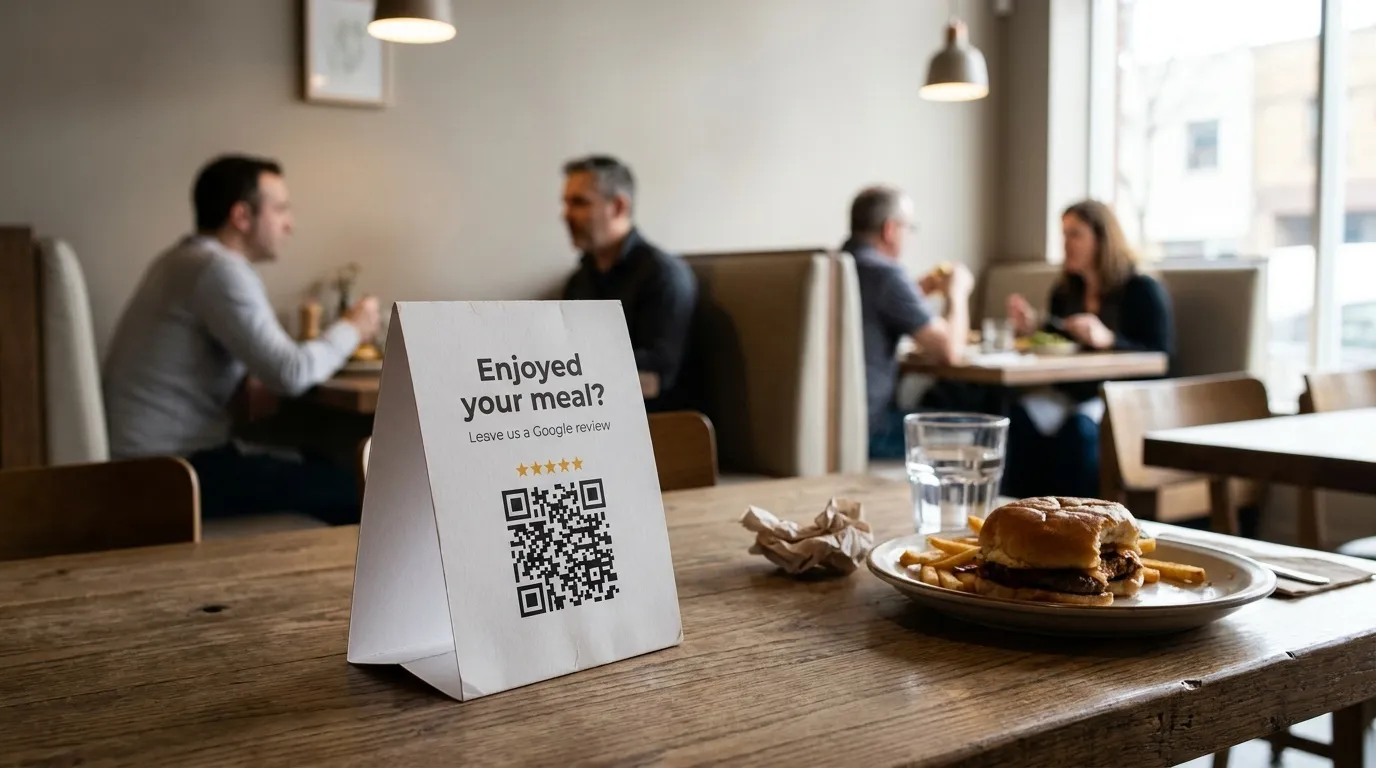
And you can make it easy for happy customers to share their honest experience.
Your Brand Matters More Than You Think
Here's another mistake restaurants make:
They think branding is just about making the restaurant look nice.
But your brand affects how people remember you.
If your website looks completely different from your restaurant, your Instagram looks different again, and your ordering experience feels like it belongs to someone else, the customer experience becomes disconnected.
A strong restaurant brand creates recognition.
When customers see your food, colours, photography, website or social media again, you want them to know:
“That's them.”
That recognition becomes more valuable over time.
It can make your restaurant easier to remember when someone is deciding where to eat.
Don't Try to Be Everywhere
You don't need to be on every platform.
You need to be where your customers are.
For one restaurant, Instagram may be extremely important.
For another, Google may bring more customers.
For another, email marketing may be a strong channel.
For another, local partnerships and community marketing may work better.
The goal isn't to create more work.
The goal is to find the channels that actually contribute to your business.
Start with the basics:
Google → Website → Ordering → Reviews → Customer retention
Then build from there.
Measure Business Results, Not Just Marketing Activity
This is where restaurant marketing gets serious.
Don't only ask:
“How many people saw the post?”
Ask:
“How many people visited?”
“How many ordered?”
“How many were new customers?”
“How many came back?”
“How much did we spend to acquire them?”
“How much revenue did the campaign generate?”
You don't need a complicated report.
You need to understand whether your marketing is helping your restaurant make money.
A campaign with 50,000 impressions and no meaningful business result may be less valuable than a campaign that reaches 2,000 local customers and generates real orders.
The best restaurant marketing isn't always the marketing that looks biggest.
It's the marketing that produces something useful.
Give Every Marketing Channel a Job
One of the easiest ways to improve your restaurant marketing strategy is to give each channel a specific role.
Google helps people find you.
When someone is already searching for what you offer, you want to be visible.
Your website helps people trust you.
It gives customers more information and helps them decide.
Online ordering helps turn interest into sales.
Make it easy for customers to take action.
Social media helps people remember you.
Show your food, your people and your experience.
Email and customer marketing help bring people back.
Stay connected with customers who already know you.
Loyalty helps create habits.
Give customers reasons to choose you again.
Paid advertising helps you reach specific audiences.
Use it when you know who you want to reach and what action you want them to take.
Now your marketing isn't a pile of disconnected tasks.
It becomes a system.
Make your advertising work harder
Connect restaurant advertising with the right audience, offer, ordering path and business goal instead of simply buying more impressions.
The Restaurant Marketing Flywheel
Think about your marketing as a cycle.
Get discovered.
↓
Build trust.
↓
Get the first order or visit.
↓
Create a great experience.
↓
Stay connected.
↓
Bring the customer back.
↓
Turn them into a regular.
↓
Give them a reason to recommend you.
↓
Get discovered by more people.
That's what sustainable restaurant marketing looks like.
You aren't constantly starting from zero.
Every customer can help create the next customer.
Every good experience can create another visit.
Every returning customer can become part of your restaurant's growth.
A Simple Restaurant Marketing Strategy That Actually Works
If your current marketing feels scattered, start here.
1. Make sure people can find you
Set up and maintain your Google Business Profile.
Keep your hours, location, menu and information accurate.
2. Build a restaurant website that does real work
Give customers a place to learn about you, see your menu, build trust and order.
3. Make direct ordering easy
Don't make customers search for how to buy from you.
4. Create content people actually care about
Show the food, people and experience—not just promotional graphics.
5. Collect genuine reviews
Your reputation is one of your strongest marketing assets.
6. Stay connected with existing customers
Don't make every campaign about finding someone new.
7. Give customers reasons to return
Use loyalty, new dishes, events, seasonal offers and relevant communication.
8. Use paid advertising with a clear purpose
Know who you are targeting and what you want them to do.
9. Measure what matters
Track orders, visits, repeat customers and revenue—not just likes and impressions.
10. Keep improving
Your best marketing strategy isn't something you create once.
Test it.
Learn from it.
Improve it.
Good Restaurant Marketing Doesn't Feel Like Marketing
The best restaurant marketing often feels simple from the customer's point of view.
They search for food.
They find you.
They see something they like.
They trust you.
They order.
They enjoy the experience.
They remember you.
They come back.
They tell someone else.
Behind that simple journey, there may be Google optimization, restaurant SEO, paid advertising, social media, customer marketing, online ordering, loyalty and a carefully designed website.
But the customer doesn't need to see all of that.
They just need the experience to feel easy.
That's what good marketing does.
It removes the distance between:
“I'm hungry.”
and
“I know where I'm going.”
Your Restaurant Doesn't Need More Marketing. It Needs Better Marketing.
You don't necessarily need to post more.
You don't necessarily need to spend more.
You don't necessarily need to be on every social platform.
You need to understand what is actually helping your restaurant grow.
Can people find you?
Can they understand what makes you different?
Can they trust you?
Can they order easily?
Can you stay connected with them?
Can you give them a reason to return?
If the answer to those questions is yes, you are no longer just promoting your restaurant.
You are building a marketing system around your restaurant.
And that's the difference between marketing that keeps you busy and marketing that actually works.
Make Your Restaurant Marketing Work Harder
tossdown connects restaurant websites, online ordering, advertising, customer marketing and loyalty into a stronger digital growth system—so your marketing can do more than create attention.
Social Media Should Make People Want to Visit
Social media is useful for restaurants because food is naturally visual.
But your Instagram or Facebook page should do more than fill a content calendar.
Every post should have a reason.
Show the food.
Show the experience.
Show the people behind the restaurant.
Show something new.
Show what makes your restaurant different.
Give customers a reason to visit.
Give them a reason to order.
Give them something they can remember.
A restaurant social media strategy should make someone think:
“I want to eat there.”
Not simply:
“Nice picture.”
That's the difference between content that gets attention and content that supports restaurant growth.