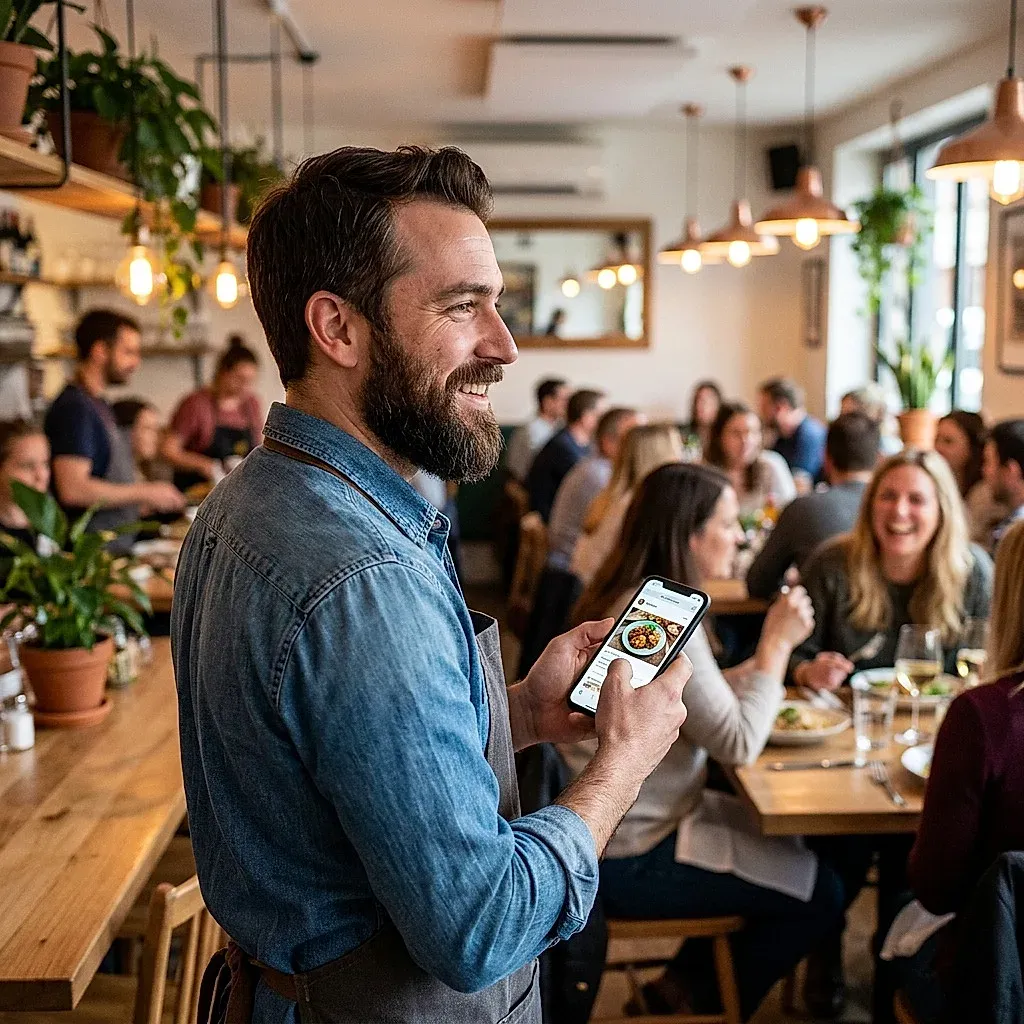
Why Does a Restaurant Need a Website in the First Place?
Before spending money on a website, a restaurant owner should ask one simple question: what job is this website supposed to do for my business?
The answer is not “because every restaurant has one.” A website should earn its place in your business. It should help people discover your restaurant, understand what you offer, trust you enough to order, and make it easy for them to come back.
Think about how a new customer usually finds a restaurant today. They may see a reel on Instagram, search “best burgers near me” on Google, notice your restaurant on Maps, hear about you from a friend, or click an ad. At that point they want answers quickly. What do you serve? Where are you? Are you open? Does the food look good? Can they order online? Can they trust the information they are seeing?
Your restaurant website can bring those answers together in one place. Instead of making customers jump between social media, delivery apps, review sites and old menu images, your website can become the clearest version of your restaurant online.
That is why a modern restaurant website should be treated as a business tool, not a box to tick.
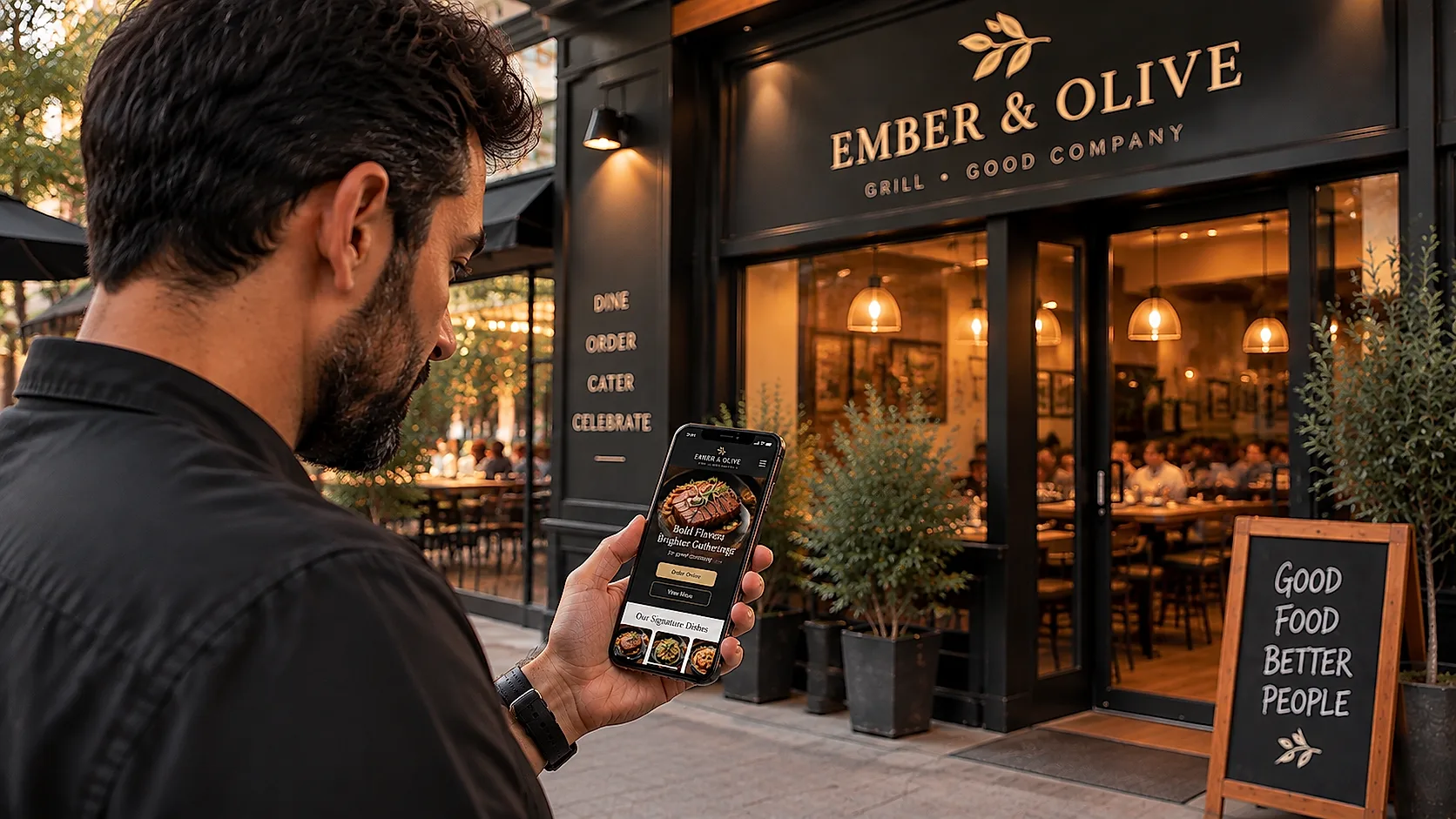
Your Website Is Your Digital Storefront
Restaurant owners understand the importance of a physical first impression. You would not spend months perfecting your food and then ignore the entrance, lighting, cleanliness or service. Those details tell customers what kind of experience they are about to have.
Your website does the same job online.
Before someone tastes your food, your website may be the first real experience they have with your restaurant. A slow, confusing or outdated website can create doubt. A clear, professional and branded restaurant website can create trust before the customer even walks through the door.
This does not mean every restaurant needs a fancy website. A neighbourhood takeaway does not need to look like a luxury steakhouse. It means the website should feel like the restaurant it represents.
A family restaurant should feel warm and welcoming. A premium dining concept should feel polished. A fast-casual brand should feel quick, clear and easy. A bold QSR should feel energetic and memorable.
Good restaurant website design is not about decoration. It is about making sure the online experience matches the promise you make in the real world.
If My Website Already Brings Orders, Why Should I Spend More on It?
This is one of the most reasonable questions a restaurant owner can ask.
If your website already shows your menu and customers can place orders, why invest more money into branding, content or design?
Because “it gets orders” and “it gets the most value from every visitor” are not the same thing.
Imagine two websites. On the first website, a customer sees the menu, orders dinner and leaves. The transaction is complete. On the second website, the customer also understands the restaurant’s story, sees why the food is different, trusts the brand, notices a catering offer, remembers the name and has an easy way to order again next week.
Both websites produced an order. Only one helped build future business.
This is the key difference. A useful restaurant website should not only answer, “Can I get an order today?” It should also answer, “Can this customer become more valuable over time?”
A better branded website can help a restaurant improve trust, make offers easier to understand, make customers more comfortable ordering directly and create a stronger memory of the brand. Those things can support more direct orders, more repeat visits and better word of mouth.
A basic website helps complete a transaction. A strong website helps build a customer relationship.
Branding Is Not About Making Your Website Look Pretty
The word “branding” often sounds like an extra expense. Restaurant owners may hear it and think about logos, fonts, colours and expensive photography.
Those things are part of branding, but they are not the reason branding matters.
Branding answers one business question: why should a customer choose you instead of the other restaurants they could order from?
If two restaurants sell similar food at similar prices, customers need another reason to remember one of them. That reason might be the story, personality, service, food quality, atmosphere, community, consistency or a clear promise the restaurant makes.
Your website is where those differences can become visible.
For example, “Large pizza – $18” tells the customer what they can buy. “Family-owned neighbourhood pizzeria making hand-stretched pies since 1998” tells them something they can remember.
The goal is not to add marketing words everywhere. The goal is to make your restaurant easy to understand and easy to remember.
A branded restaurant website can also improve trust. When the photos, menu, tone, colours and message all feel consistent, the business looks more established. Customers are less likely to wonder if the menu is current, if the ordering page is legitimate or if they have landed on the wrong website.
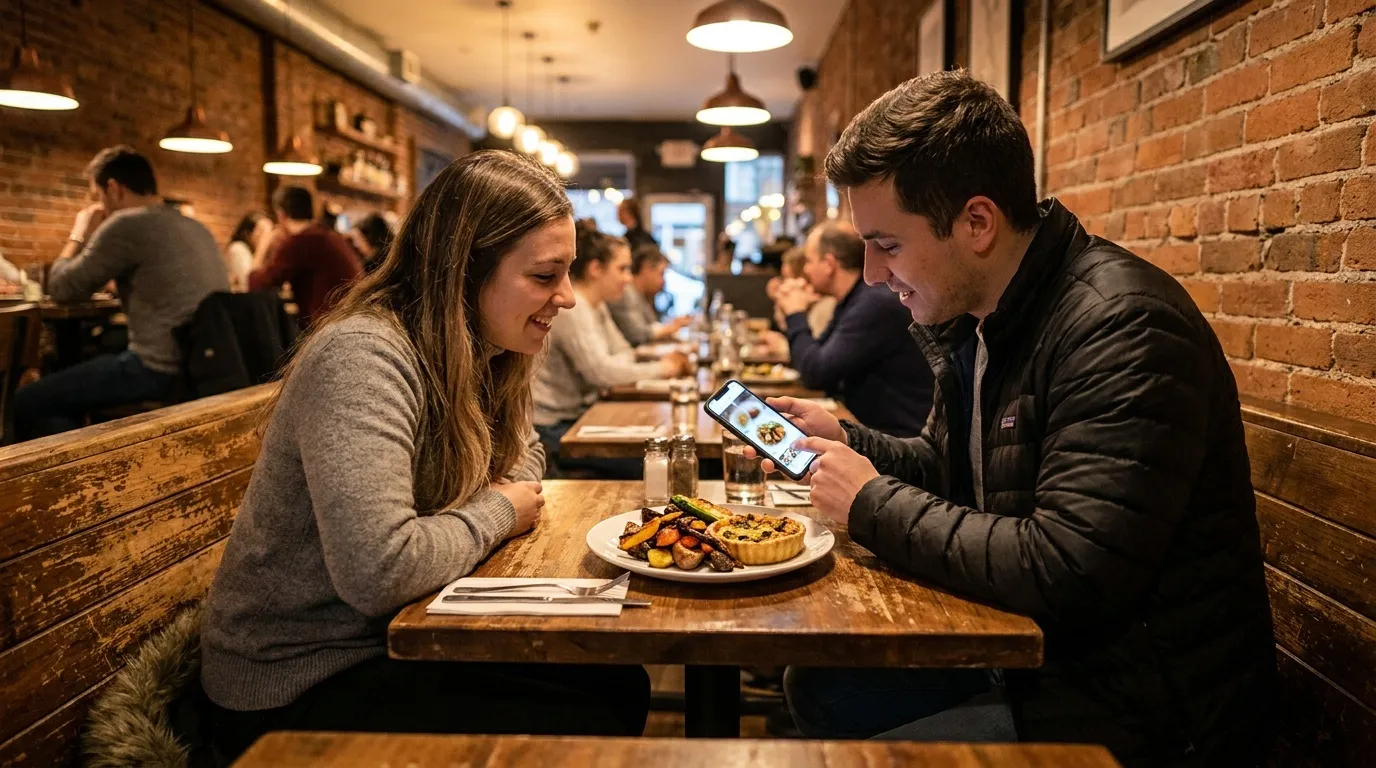
Your Website Should Tell People Why Your Restaurant Is Different
Many restaurant websites contain the same four things: a logo, a menu, an address and a phone number. Those are useful, but they do not answer the customer’s biggest question: why this restaurant?
Your website should make the answer obvious.
Maybe you are known for halal Chinese food. Maybe your family has been making the same recipes for three generations. Maybe you have the best late-night delivery in the area. Maybe your ingredients are locally sourced. Maybe your restaurant is designed for large family gatherings. Maybe your strength is fast lunch service for office workers.
Those differences are part of your restaurant marketing. They should not be hidden.
Clear positioning also helps search engines understand your business. If your website clearly explains your cuisine, location, services, menu and what makes you different, Google has better information to use when deciding what your pages are about.
Restaurant SEO Starts With Being Clear About Who You Are
Restaurant SEO can sound complicated, but the basic idea is simple: make it easy for search engines and customers to understand your restaurant.
If someone searches “halal restaurant in Springfield,” “best biryani near Sterling,” “family restaurant in Toronto,” or “pizza delivery near me,” Google tries to show businesses that match what the person wants.
Your website gives Google useful information about your restaurant. Your location pages, menu pages, opening hours, cuisine, services, food descriptions and contact details all help search engines understand where you are and what you offer.
That is why a restaurant website should contain real information written in clear language. Do not hide everything inside images. Give important menu items, locations, catering services, delivery information and restaurant details proper text on the page.
A strong website does not guarantee that you will rank higher on Google. No honest restaurant website builder can promise that. But good restaurant SEO gives search engines a clearer, more useful website to understand and gives customers a better page when they arrive.
What does Google want from a restaurant website?
Google generally wants to help the searcher find a useful answer. For a restaurant, that means your website should make important information easy to find: your name, location, menu, cuisine, hours, ordering options and what customers can expect.
In other words, the same things that help Google understand your restaurant usually help your customers too.
What About ChatGPT, Google AI and GEO?
People are no longer searching only by typing short phrases into Google. They are also asking longer questions in AI tools such as ChatGPT and in search experiences that provide AI-generated answers.
A customer might ask, “What is a good halal Pakistani restaurant near Dulles?” or “Where can I order family-size Chinese food in Springfield?”
This is where people sometimes use the term GEO , or Generative Engine Optimization. The idea is similar to SEO: make your business information clear, useful and easy for search and AI systems to understand.
There is no magic switch that makes a website “loved by ChatGPT,” and no website can guarantee that an AI assistant will recommend it. But restaurants can make their information easier to discover by publishing clear pages about their locations, cuisine, menu, services, brand story, FAQs and other useful details.
That means your restaurant website is becoming important for more than traditional Google Search. It can also act as a reliable source of information about your business across the wider search journey.
Make your restaurant easier to discover online
A clear, branded restaurant website gives search engines and customers one reliable place to understand your business.
Your Website Should Turn Visitors Into Customers
Getting traffic is not enough. A thousand website visitors are not useful if customers cannot figure out what to order or how to place an order.
Your website should remove doubt and make the next step obvious.
Customers should be able to see your food, understand prices, find the right location and order without getting lost. Popular dishes should be easy to find. Offers should be easy to understand. Important buttons should not be buried.
This is where restaurant website design directly connects to business results. A clearer website can reduce confusion. Professional food photography can create appetite. Reviews or customer proof can increase trust. A simple direct online ordering journey can make it easier for customers to complete their order.
The goal is not to make people admire your website. The goal is to help more of the right visitors become customers.
More Orders Are Good. Better Customers Are Better.
Most restaurant marketing focuses on getting the next order. That is important, but long-term restaurant growth depends heavily on customers coming back.
Consider two customers.
Customer A places one $40 order and never returns. Customer B places a $30 order every month for three years, brings family members to dine in and recommends the restaurant to friends.
Which relationship would you rather build?
This is why customer loyalty for restaurants matters. A website can support that relationship by making repeat ordering easier, showing loyalty offers, promoting catering or special occasions, and giving customers a familiar place to return.
The website becomes more valuable every time it helps a customer remember your restaurant instead of starting their search from zero.
Your Website Should Work Like Your Best Employee
Imagine your best front-of-house employee.
They welcome customers. They answer common questions. They explain what is popular. They make people feel comfortable. They help someone choose and they make the experience easy enough that the customer wants to return.
Your restaurant website should do a version of the same job, 24 hours a day.
It should answer “Where are you?” “Are you halal?” “Do you deliver?” “Do you offer catering?” “What should I order?” and “How can I order now?” without making the customer hunt for answers.
When your website does this well, it reduces friction for customers and gives your restaurant a more professional presence online.
What Should a Restaurant Website Actually Do?
1. Help people find your restaurant
Your restaurant website should give Google and customers clear information about your location, cuisine, menu and services. This supports local SEO for restaurants and makes your business easier to understand.
2. Build trust before the customer orders
Professional photos, accurate information, a clear brand story and a consistent look can help customers feel confident that they are ordering from a real, reliable restaurant.
3. Make direct online ordering easy
An online ordering website for restaurants should make it simple to browse the menu, understand options and complete an order without unnecessary steps.
4. Show what makes your brand different
Your restaurant website should communicate more than food names and prices. It should explain the experience, values or strengths that make your restaurant worth choosing.
5. Help customers come back
A good website should support repeat business through easy reordering, offers, loyalty and a familiar branded experience.
6. Support more parts of your business
Your website can also promote catering, reservations, events, gift cards, multiple locations and other services that may bring additional revenue.
Your Restaurant Website Is an Investment in Future Growth
Restaurant owners already invest in things that improve the customer experience and make the business stronger: kitchen equipment, staff training, packaging, signage, interiors and marketing.
Your digital presence deserves the same thinking.
A restaurant website is not valuable simply because it exists. Its value comes from the work it does for your business.
Does it help you get discovered? Does it build trust? Does it explain why your restaurant is different? Does it make ordering easy? Does it bring customers back? Does it support restaurant SEO and give Google clear information? Does it provide useful information that can also be understood by newer AI search experiences?
If the answer is yes, then your website is doing more than taking orders.
It is helping build your restaurant.
Build a Digital Home That Helps Your Restaurant Grow
Your restaurant deserves more than a website that simply displays a menu. Create a branded digital experience that helps customers discover your business, trust your restaurant, order directly and come back again.
Social Media Gets Attention. Your Website Turns Attention Into Business.
Instagram, TikTok and Facebook are useful restaurant marketing channels. Great food content can introduce your brand to thousands of people.
But attention alone does not pay the bills.
After someone sees your food, where do you want them to go?
Your website can become the next step. It can turn social attention into menu views, reservations, direct online ordering, catering enquiries and repeat visits.
Social platforms are also controlled by other companies. Algorithms change. Reach changes. Accounts can lose visibility. Your website gives your restaurant a digital home that you control.
That does not mean leaving social media. It means giving social media a job: bring people in. Then let your website help convert that attention into business.